mod30-residue-lanes / lab report
Notebook 29 — Sparse Feature Emergence at the Reset Boundary
Sparse emergence analysis across the modulo-30 reset manifold:
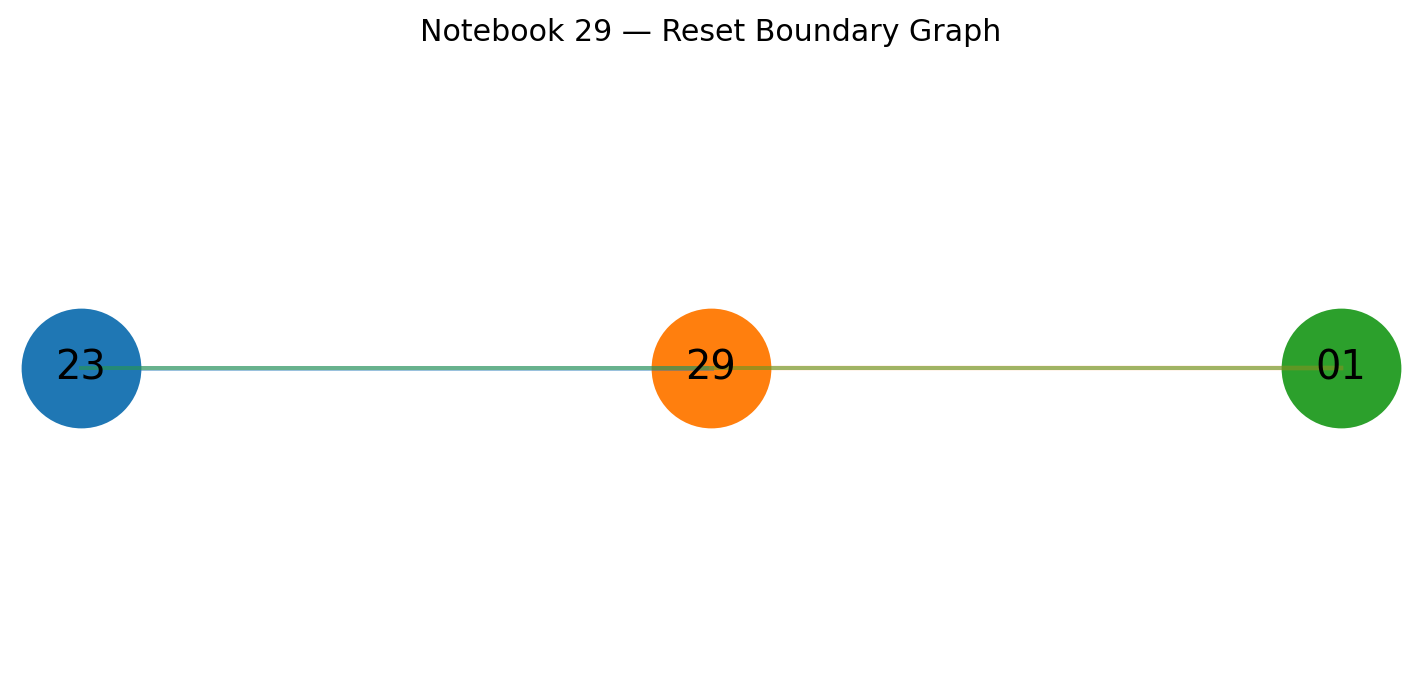
23 → 29 → 01
Overview
Notebook 29 studies sparse feature emergence near the modulo-30 reset boundary.
Instead of treating residue lanes as isolated categories, the notebook models:
23 → 29 → 01
as a cyclic transition manifold where sparse activations, local pressure changes, and reset-boundary dynamics accumulate over rolling windows.
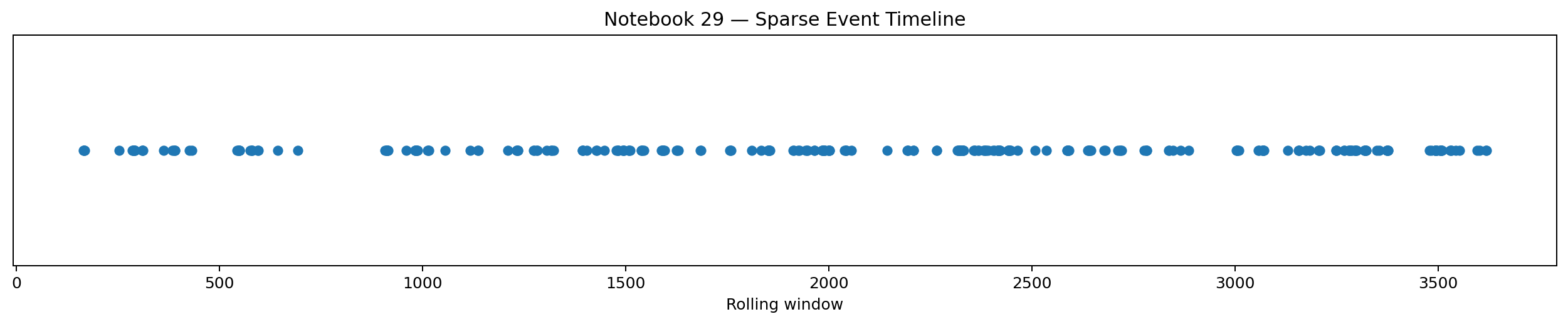
The resulting framework provides a lightweight emergence-monitoring pipeline using rolling residue statistics, sparse feature transforms, boundary-pressure metrics, and temporal event detection.
Core Features
| Feature | Description |
|---|---|
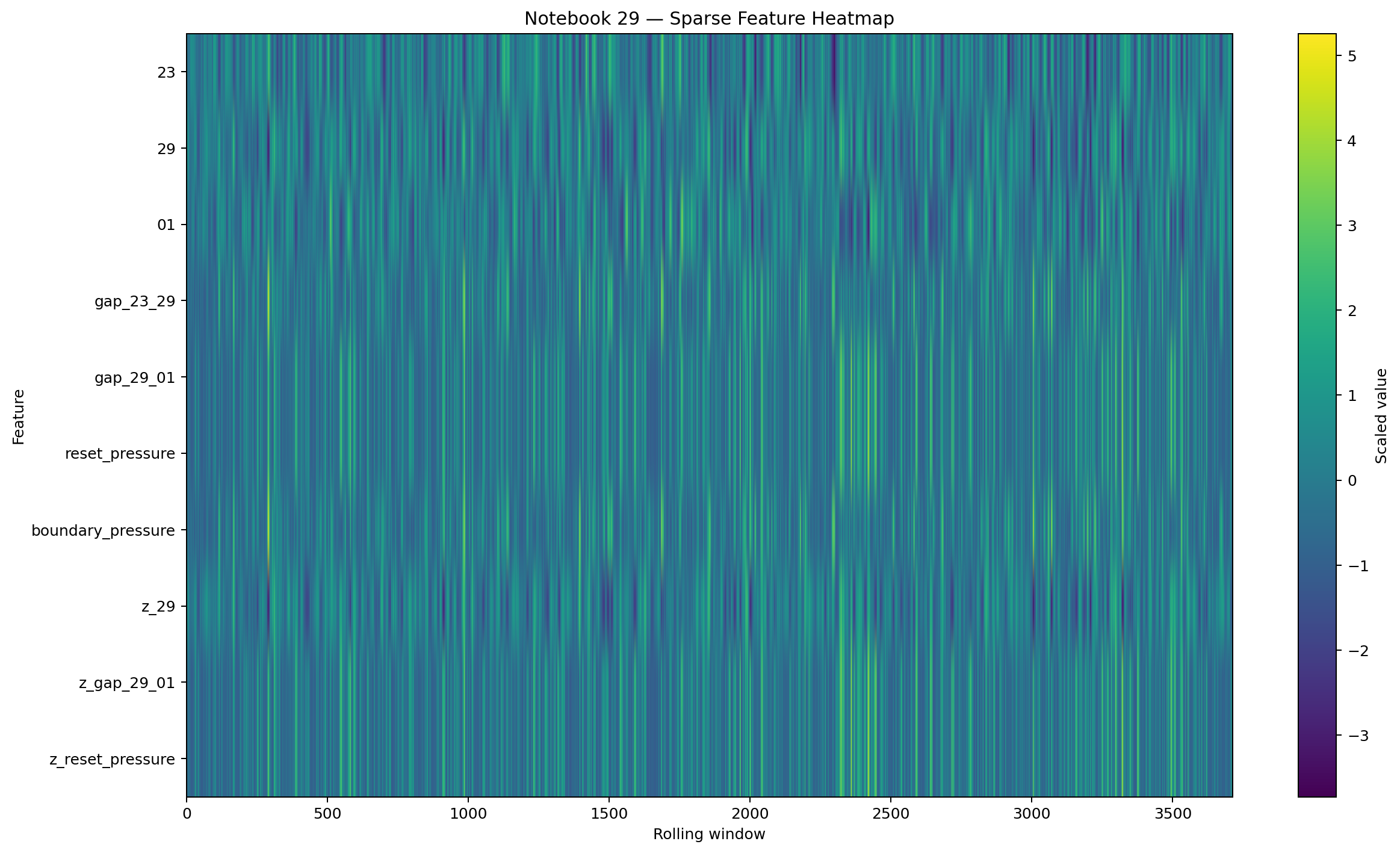
23, 29, 01 | Rolling residue counts near reset boundary. |
gap_23_29 | Transition spacing between 23 and 29. |
gap_29_01 | Reset spacing across modulo rollover. |
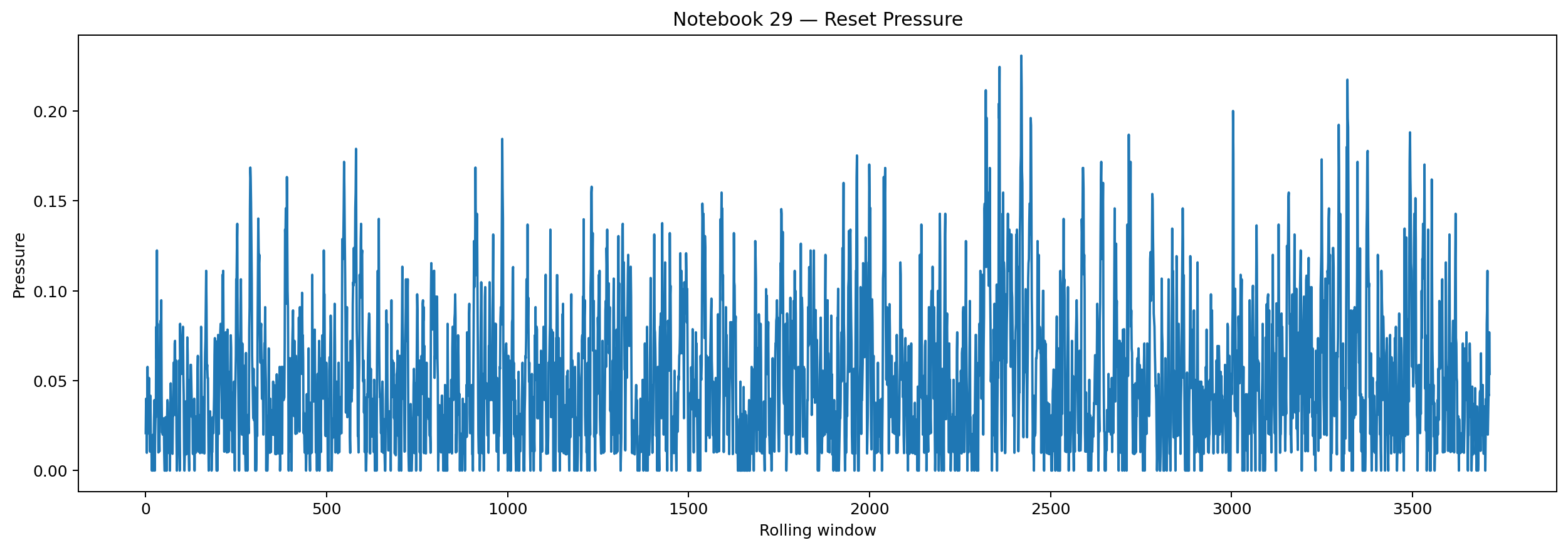
reset_pressure | Boundary imbalance metric across the reset edge. |
boundary_pressure | Amplified local transition intensity. |
z_* features | Normalized sparse-event indicators. |
Reset Boundary Graph
23 → 29 → 01Sparse Feature Heatmap
Reset Pressure
Sparse Event Timeline
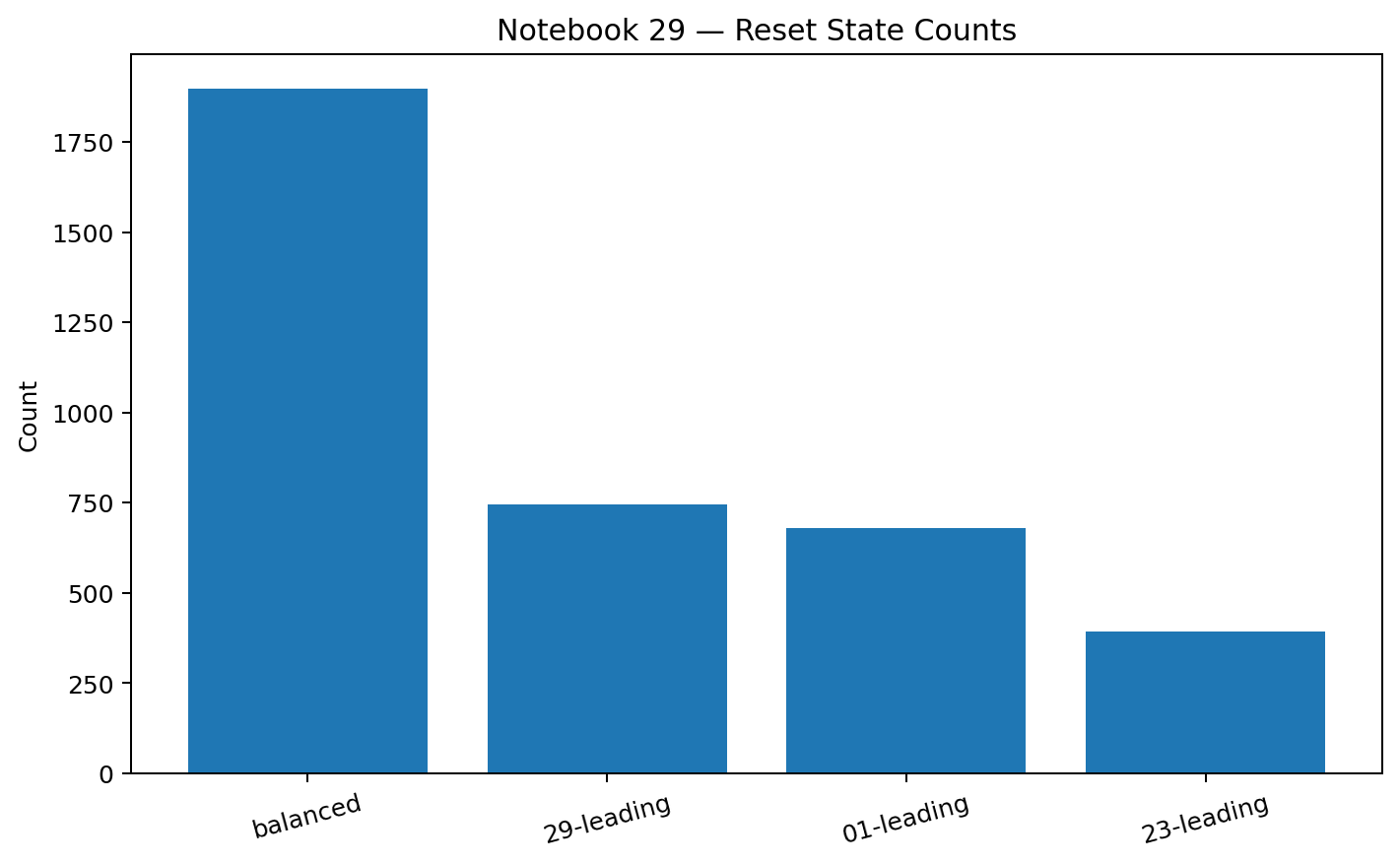
Reset State Counts
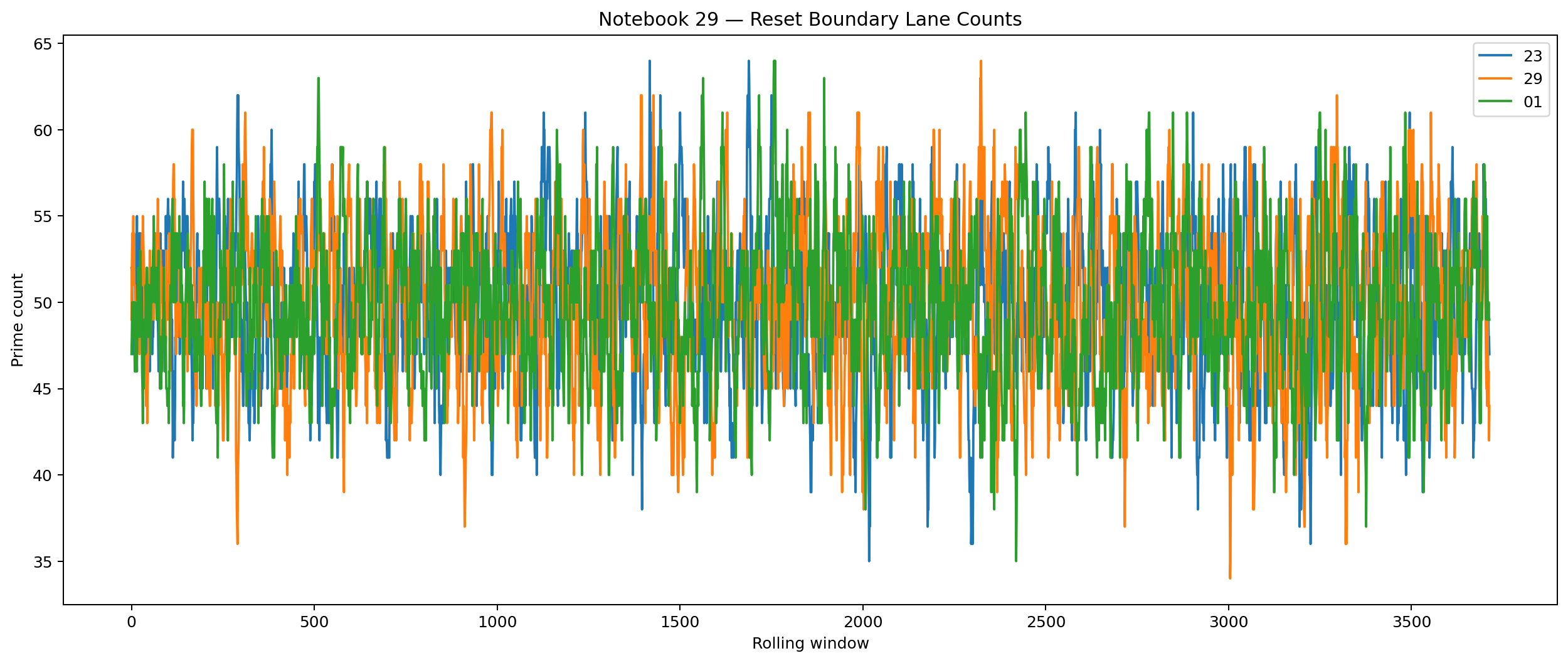
Reset Boundary Lane Counts
Interpretation
Sparse emergence does not appear uniformly random.
Instead, reset-boundary transitions exhibit localized activation clustering, coherent pressure spikes, cross-feature coupling, and stable baseline regions interrupted by sparse transition bursts.
This suggests that lightweight residue-manifold monitoring may already contain useful emergence signals before large-scale latent modeling.
Relationship to Earlier Notebooks
Notebook 23 established graph Laplacians, spectral embeddings, lane-correlation structure, and manifold connectivity.
Notebook 29 extends this into sparse activation structure, transition-state monitoring, reset-boundary pressure tracking, and temporal emergence analysis.