mod30-residue-lanes / lab report
Notebook 13 — Boundary Effects: Pre-15 Prime-Lane Pressure
Rolling drift becomes measurable boundary pressure at the central split:
11 → 13 | 17 → 19
Overview
Notebook 13 is where rolling motion becomes boundary pressure.
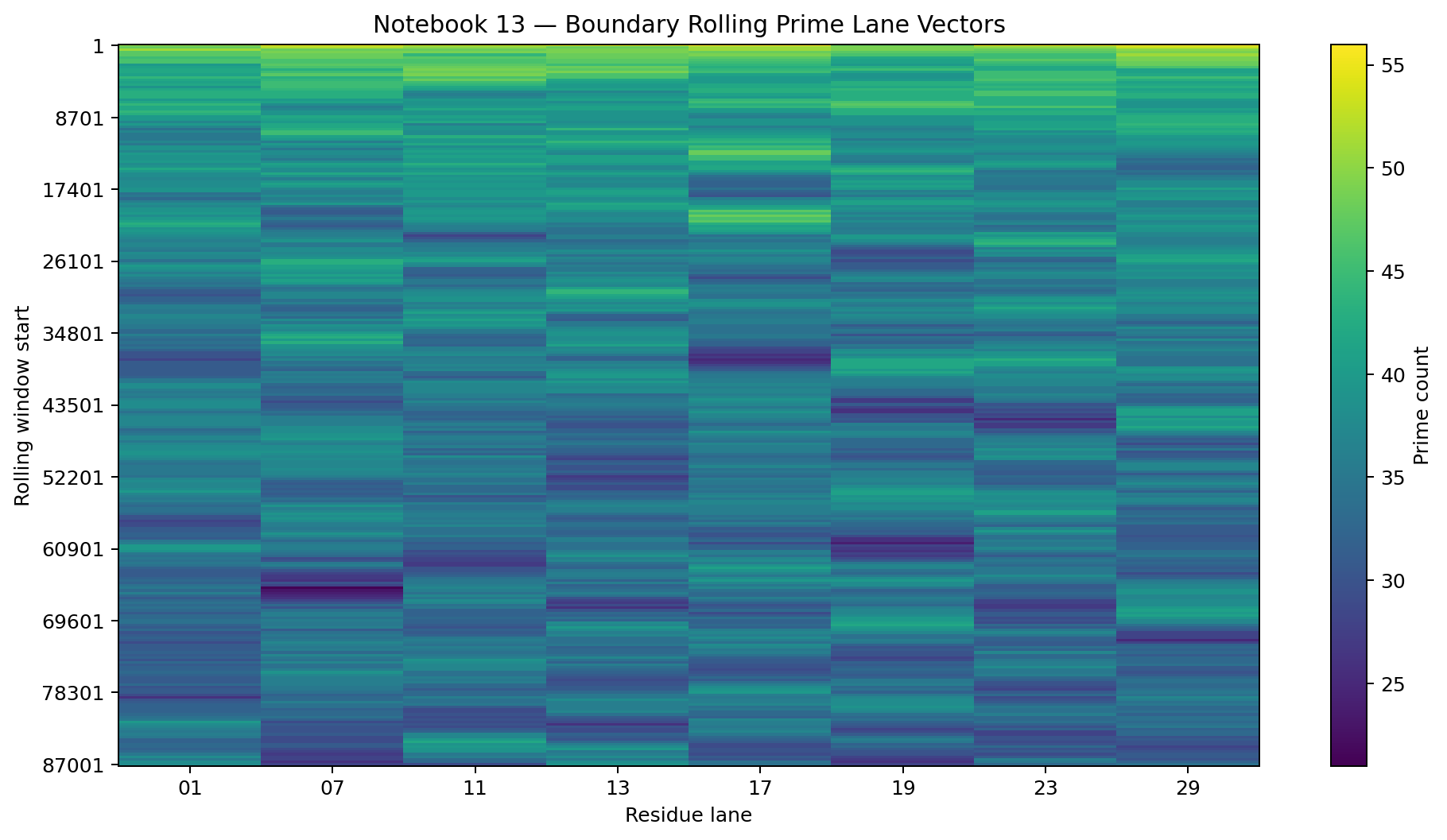
Notebook 11 introduced rolling prime-lane trajectories. Notebook 13 focuses that motion around the central mod30 split between lane 13 and lane 17.
rolling drift → central split → boundary pressure
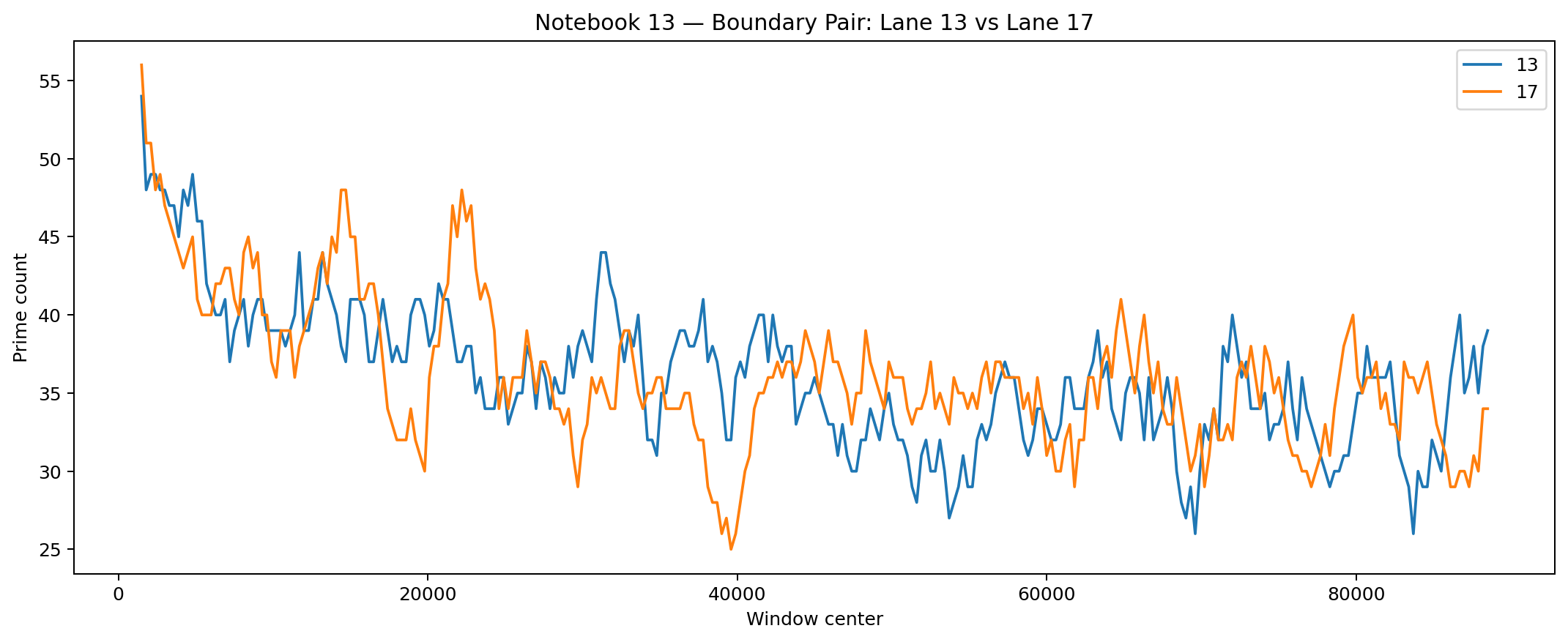
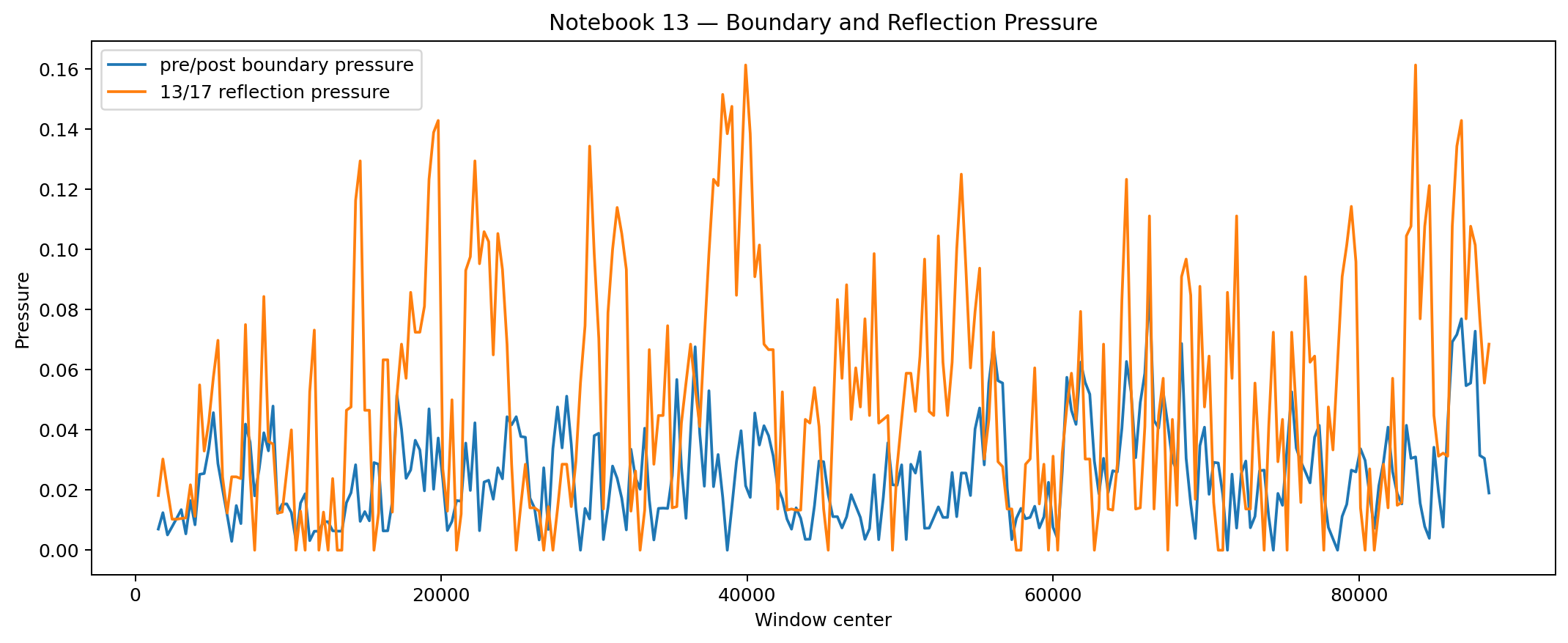
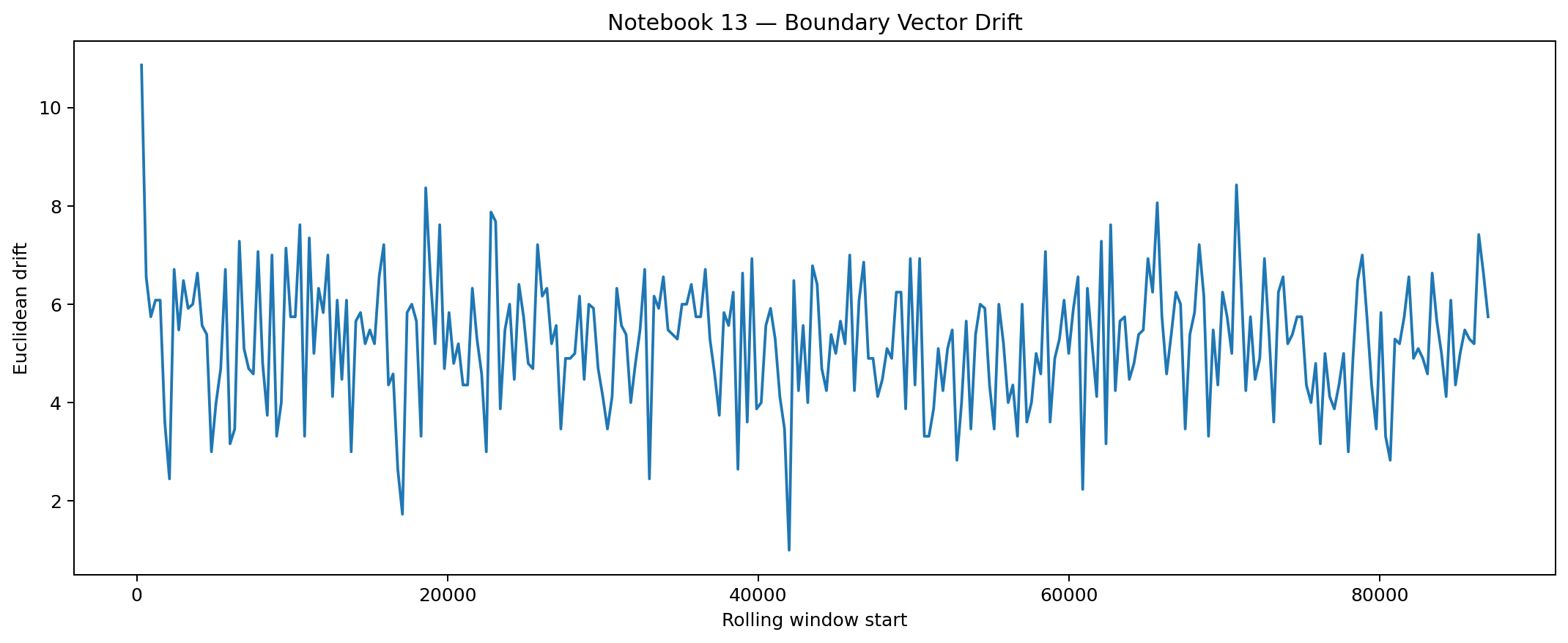
This report measures reflected-pair behavior, pre/post imbalance, local pressure,
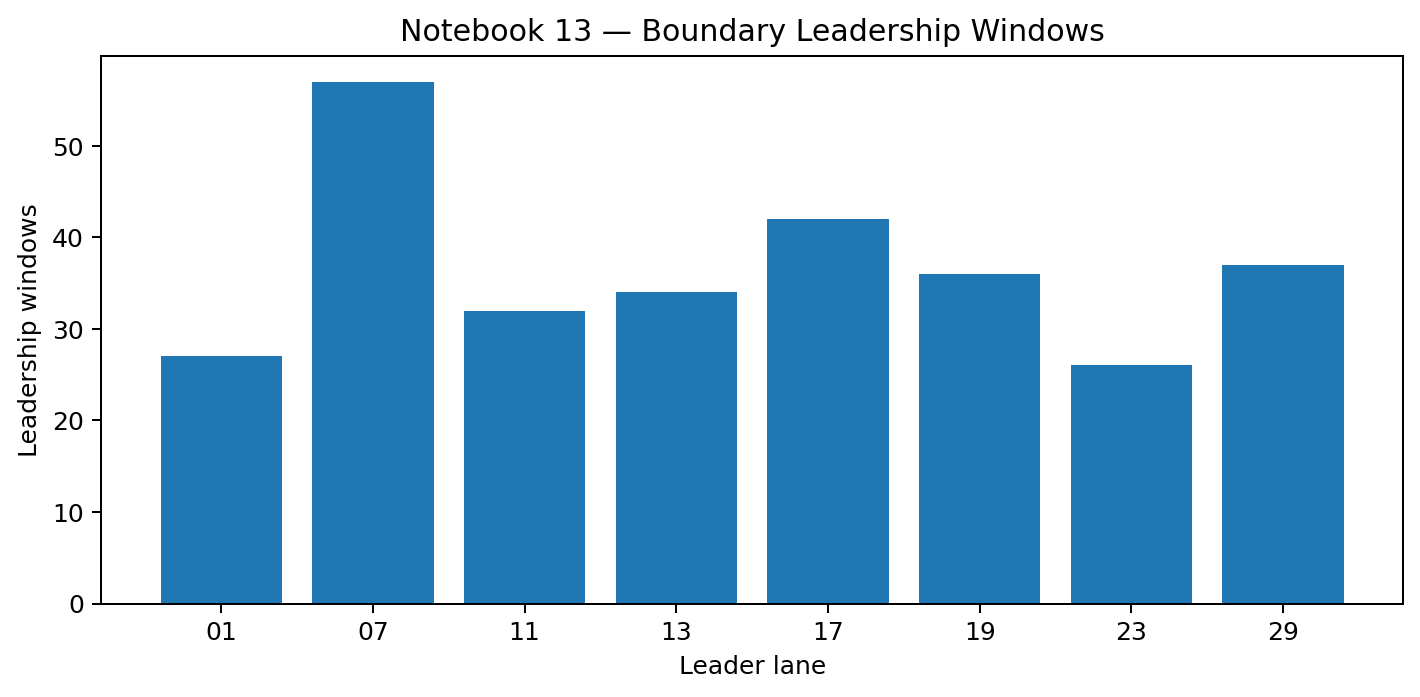
boundary drift, and leadership changes around the transition:
11 → 13 | 17 → 19.
Core Features
| Feature | Description |
|---|---|
lane13_count |
Rolling prime count for the pre-15 boundary lane. |
lane17_count |
Rolling prime count for the reflected post-15 partner lane. |
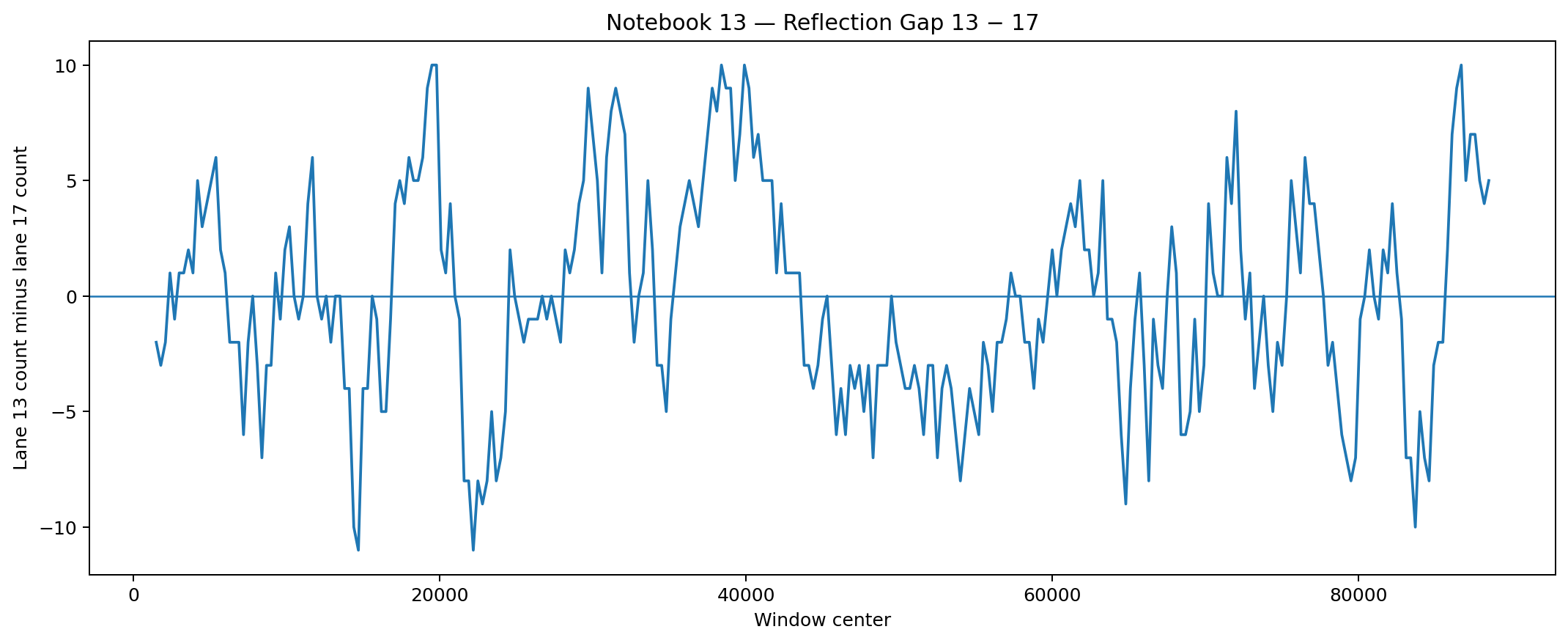
reflection_gap_13_17 |
Difference between lane 13 and lane 17 rolling counts. |
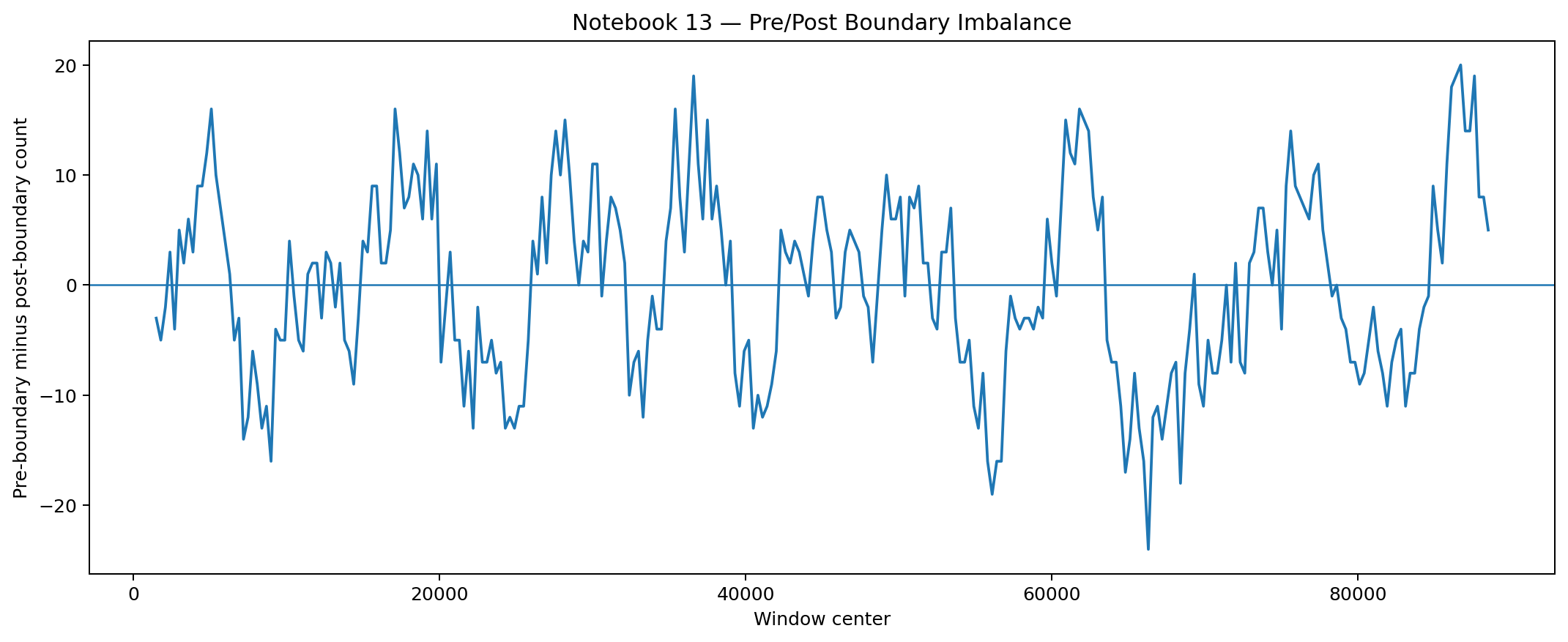
boundary_imbalance |
Pre-boundary lane occupancy minus post-boundary lane occupancy. |
boundary_pressure |
Normalized magnitude of pre/post boundary imbalance. |
reflection_pressure |
Normalized pressure between reflected lanes 13 and 17. |
Boundary Rolling Prime Lane Vectors
Lane 13 vs Lane 17
Reflection Gap 13 − 17
Pre/Post Boundary Imbalance
Boundary and Reflection Pressure
Boundary Vector Drift
Boundary Leadership Windows
Interpretation
Notebook 13 turns rolling drift into measurable boundary pressure.
The central split between lanes 13 and 17 lets the manifold express:
- reflected-pair dynamics,
- pre/post imbalance,
- bounded pressure oscillation,
- and locally changing lane leadership.
This is the first report where the residue manifold has explicit pressure variables rather than only counts, similarities, or drift magnitudes.
Relationship to Neighboring Notebooks
Notebook 11 introduced rolling drift trajectories across the eight admissible lanes.
Notebook 13 focuses those trajectories around the central boundary:
11 → 13 | 17 → 19.
Notebook 17 then turns the reflected side of this boundary into a spectral decomposition problem, using lane 17 as the post-15 anchor.