mod30-residue-lanes / lab report
Notebook 11 — Window Drift: Rolling Prime-Lane Trajectories
Rolling windows turn prime-filtered asymmetry into trajectory dynamics:
prime-filtered counts → rolling windows → trajectory drift
Overview
Notebook 11 is where residue lanes stop looking like bins and start behaving like trajectories.
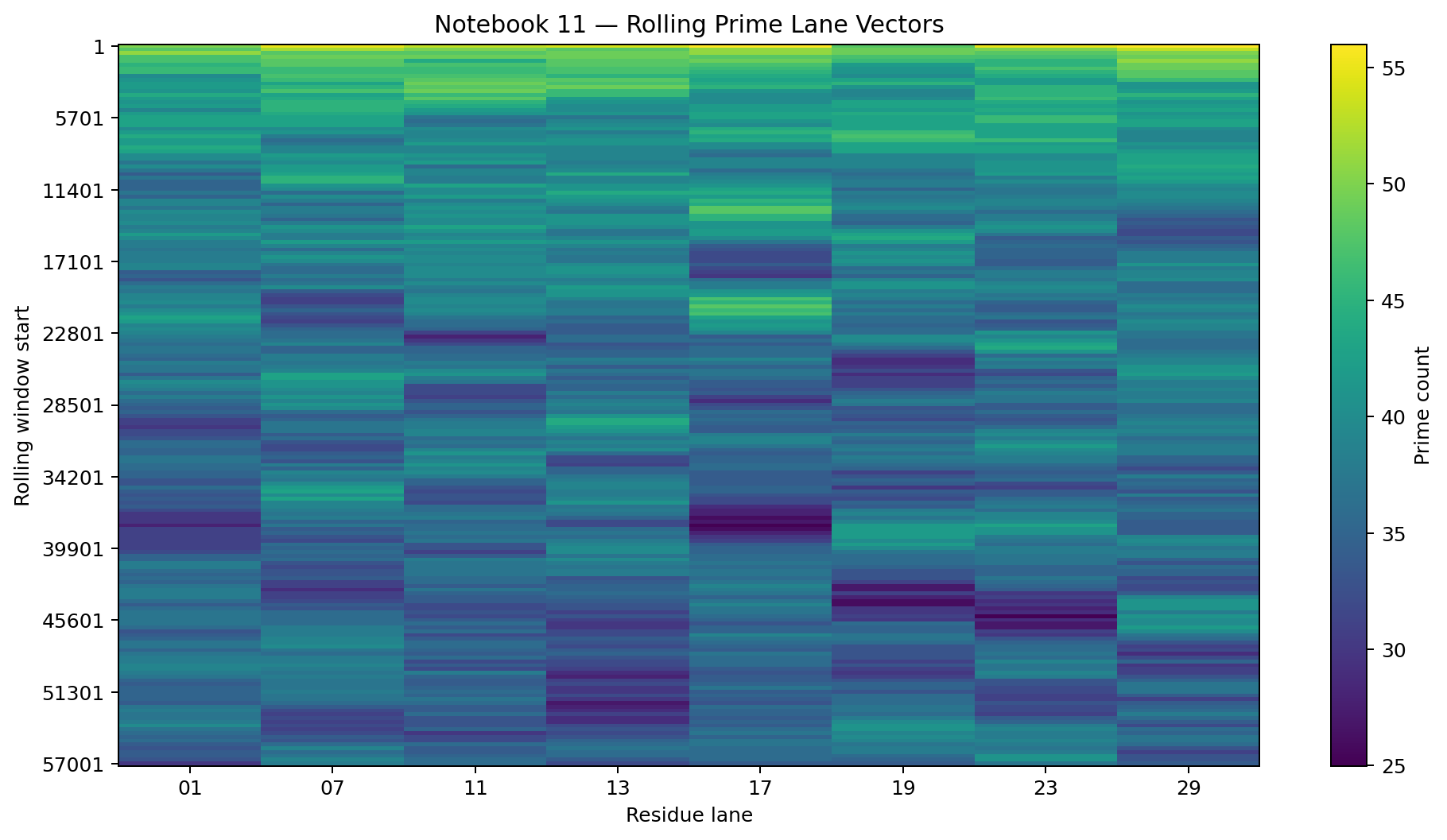
Notebook 07 introduced prime-filtered asymmetry. Notebook 11 keeps the same eight-lane substrate, but slides rolling windows across the prime-filtered stream so local lane counts evolve through time.
07 → asymmetry
11 → motion
13 → pressure
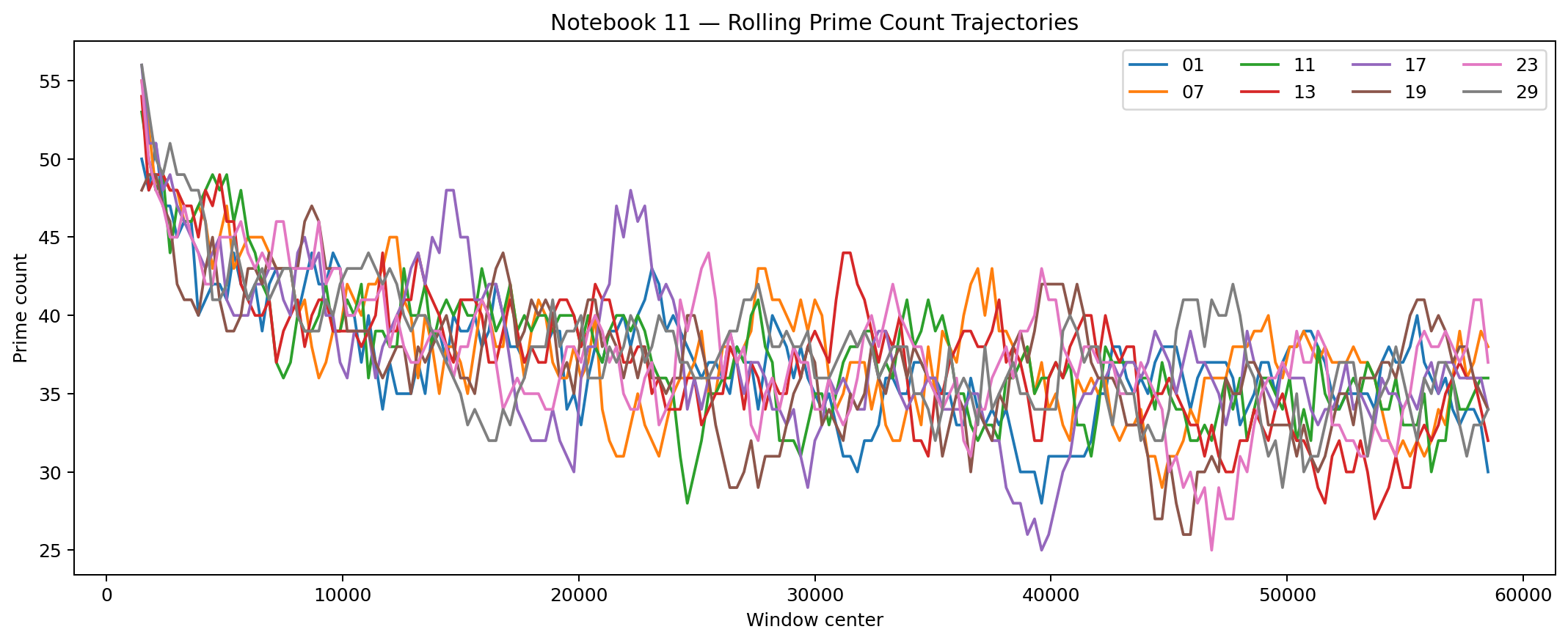
The result is a temporal manifold: lane counts fluctuate, drift remains bounded, correlations split into neighborhoods, and local leadership changes over rolling windows.
Core Features
| Feature | Description |
|---|---|
rolling_prime_lane_vectors |
Eight-lane prime-count vectors sampled over overlapping rolling windows. |
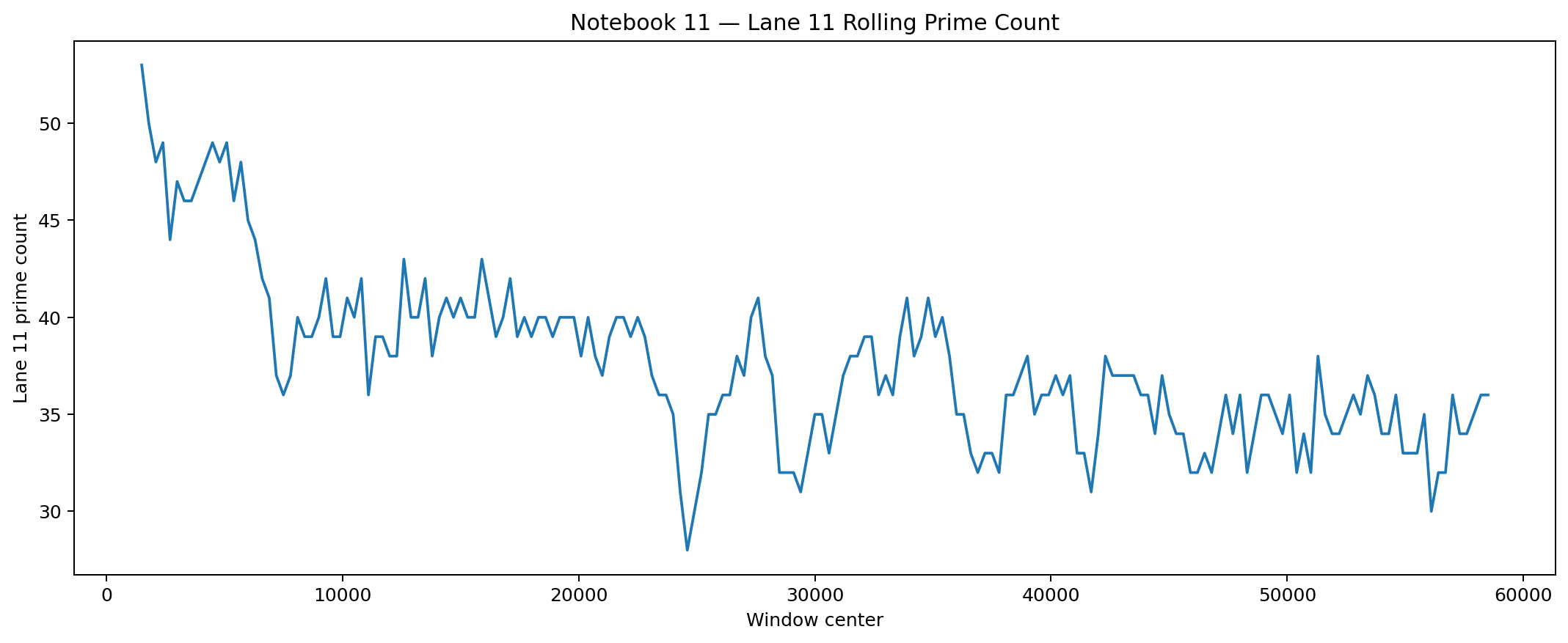
lane11_count |
Focal rolling prime-count trajectory for residue lane 11. |
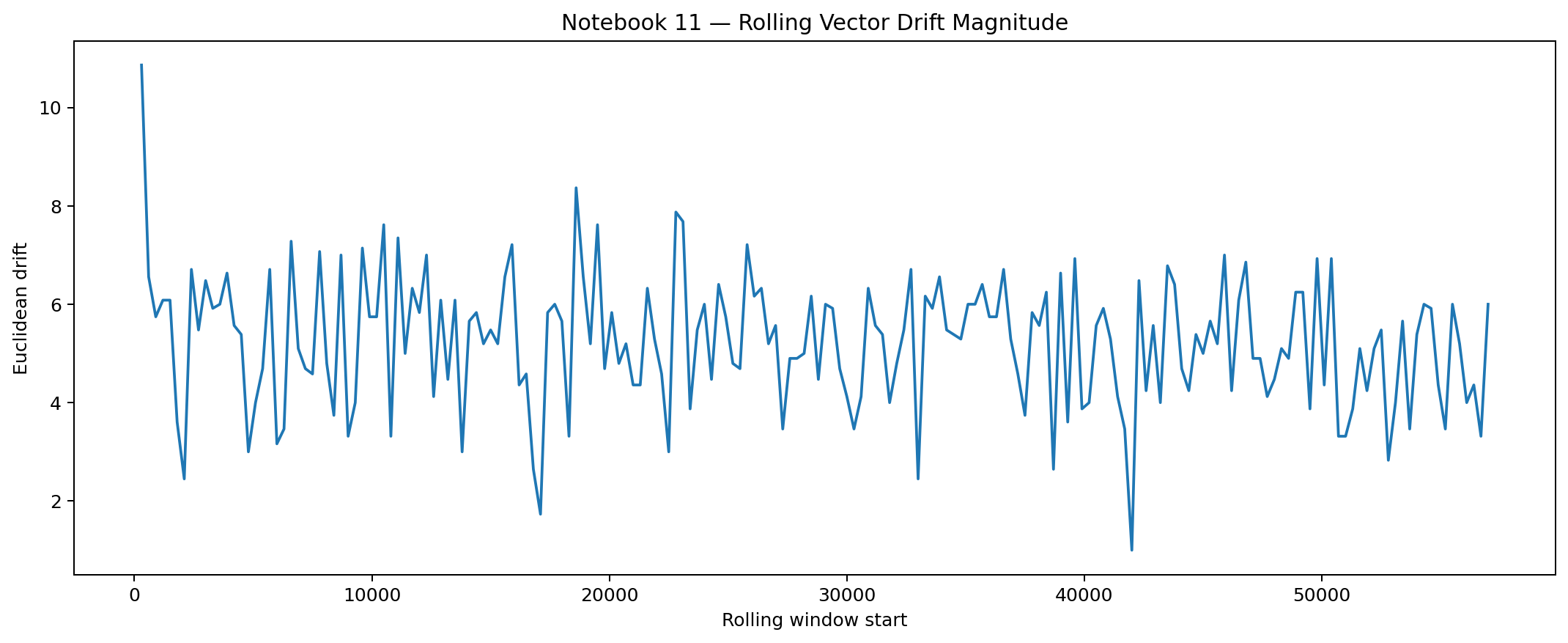
euclidean_drift |
Magnitude of vector change between adjacent rolling windows. |
cosine_drift |
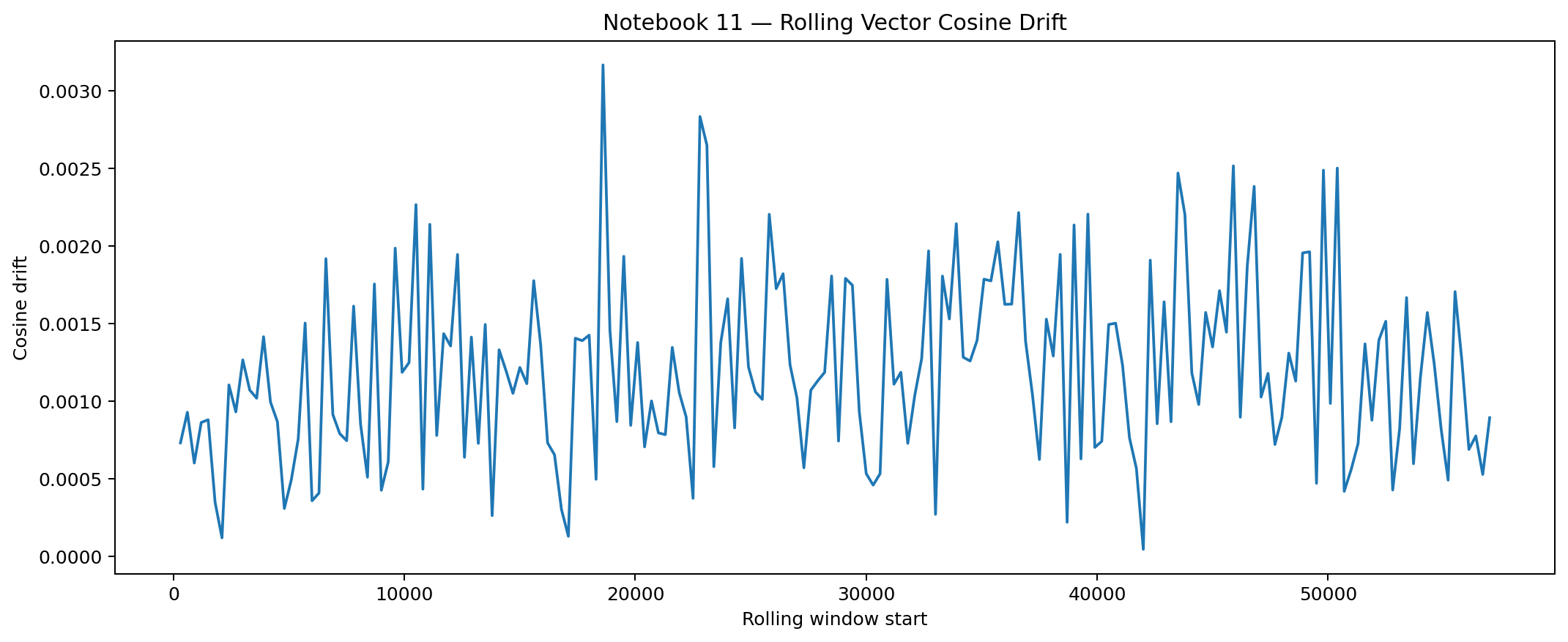
Angular change between adjacent eight-lane manifold states. |
lane11_correlation |
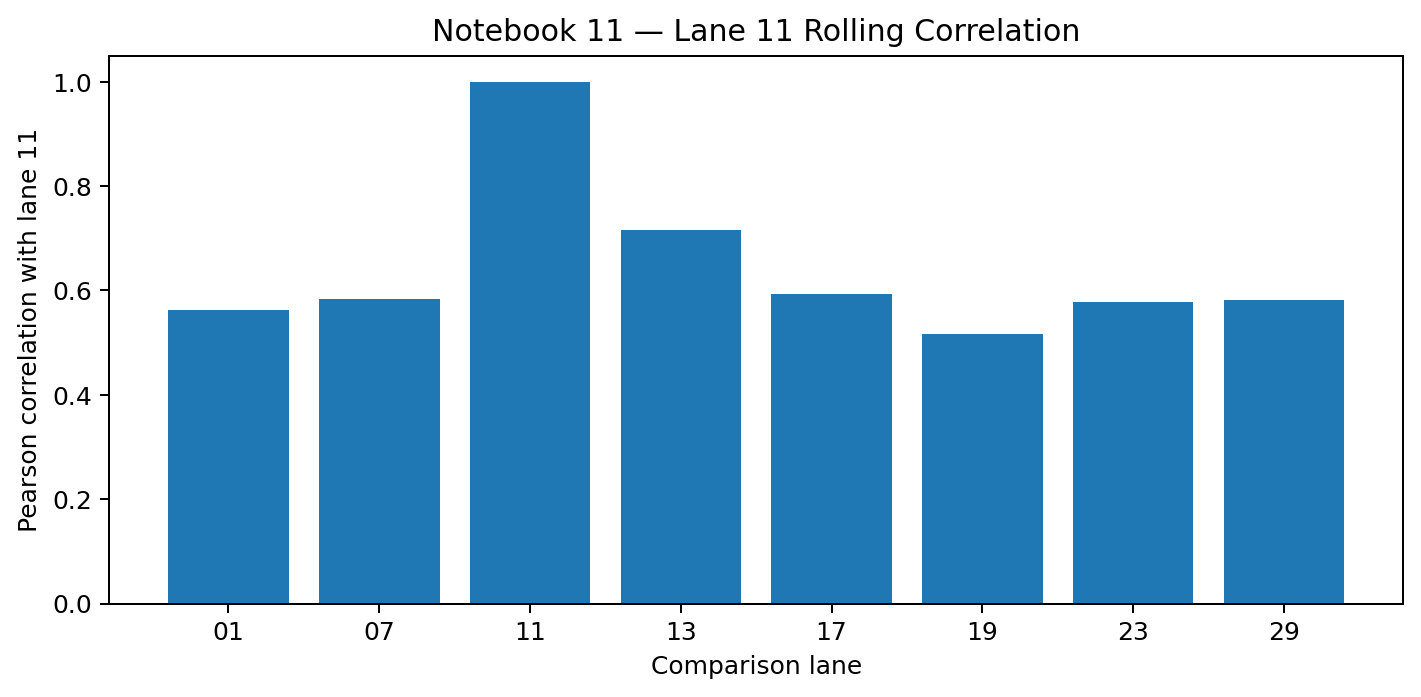
Correlation between lane 11 and other admissible-lane trajectories. |
lane_leadership |
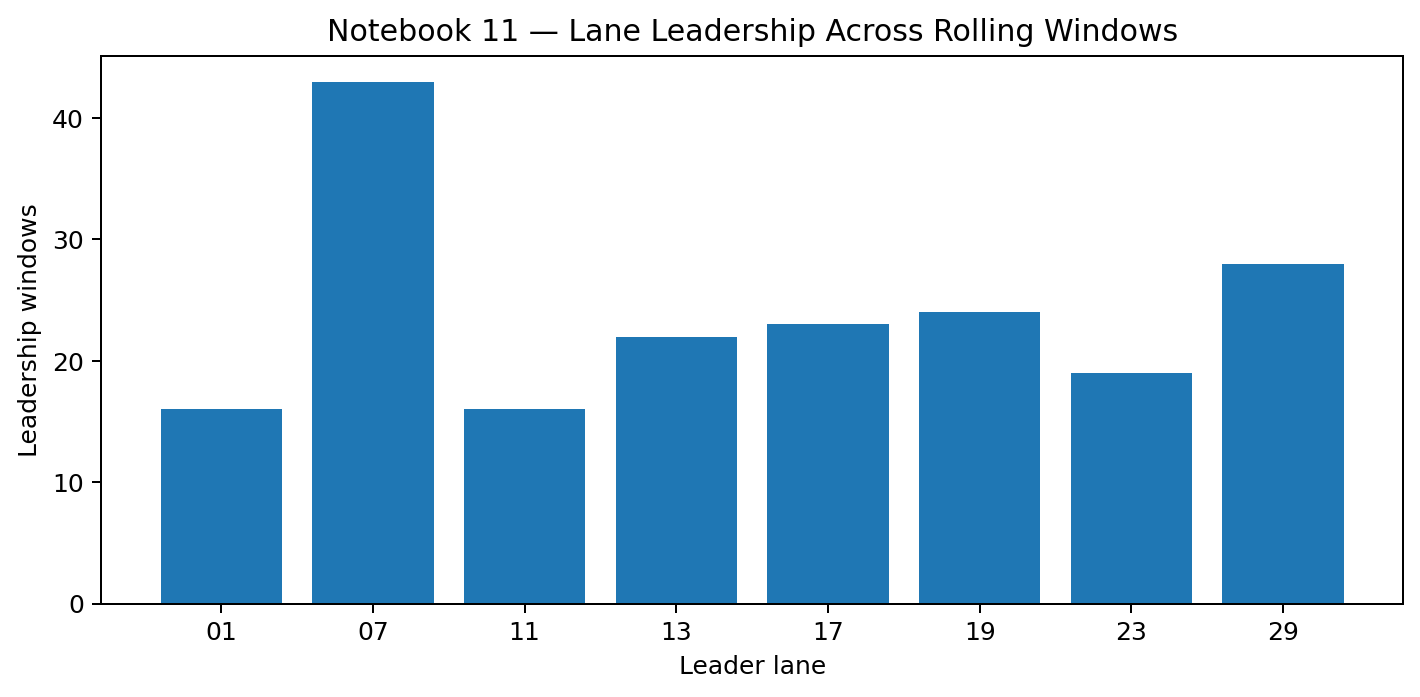
Windows where a lane locally dominates prime-count occupancy. |
Rolling Prime Lane Vectors
All Lane Rolling Trajectories
Lane 11 Rolling Count
Euclidean Drift Timeline
Cosine Drift Timeline
Lane 11 Rolling Correlation
Lane Leadership Windows
Interpretation
Notebook 11 turns static prime-filtered asymmetry into rolling trajectory dynamics.
The manifold no longer only has unequal lane occupancy. It now exhibits:
- bounded drift,
- correlated motion,
- local leadership changes,
- and lane-neighborhood structure.
This is the first report where mod30 residue lanes begin to behave like a dynamic system rather than a collection of residue categories.
Relationship to Neighboring Notebooks
Notebook 07 introduced asymmetry by filtering the admissible lanes through primes.
Notebook 11 turns that asymmetry into motion by tracking rolling-window trajectories.
Notebook 13 then focuses that motion around the central boundary:
11 → 13 | 17 → 19.