mod30-residue-lanes / lab report
Notebook 19 — Temporal Spectral Dynamics of Residue Manifolds
Spectral modes become temporal phase dynamics:
spectral modes → rolling eigenspaces → temporal phases
Overview
Notebook 19 turns spectral modes into temporal phase dynamics.
Notebook 17 decomposed rolling residue-lane trajectories into spectral modes. Notebook 19 asks whether those spectral structures remain stable, rotate, fragment, or reorganize over time.
17 → spectral decomposition
19 → temporal eigenspace dynamics
23 → graph manifold embeddings
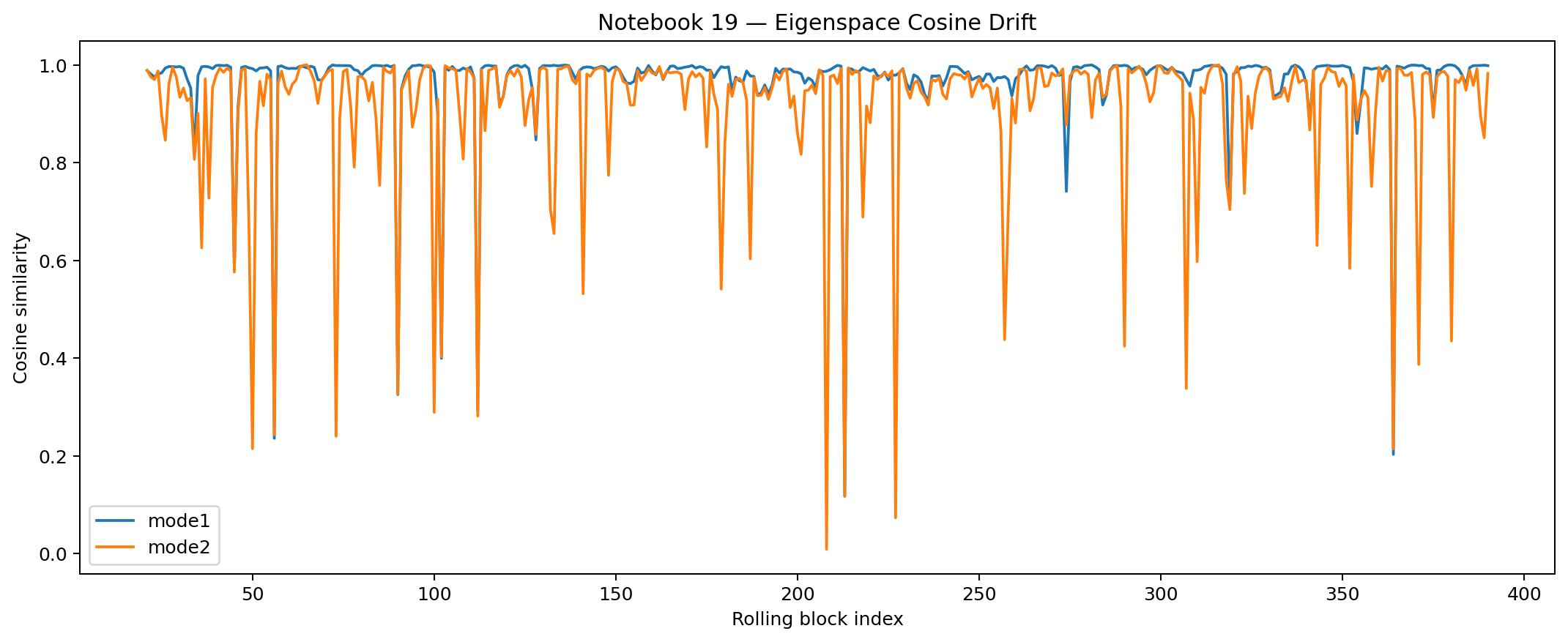
The result is a phase-system view of the mod30 residue manifold: stable global modes persist while secondary modes rotate through bounded temporal transitions.
Core Features
| Feature | Description |
|---|---|
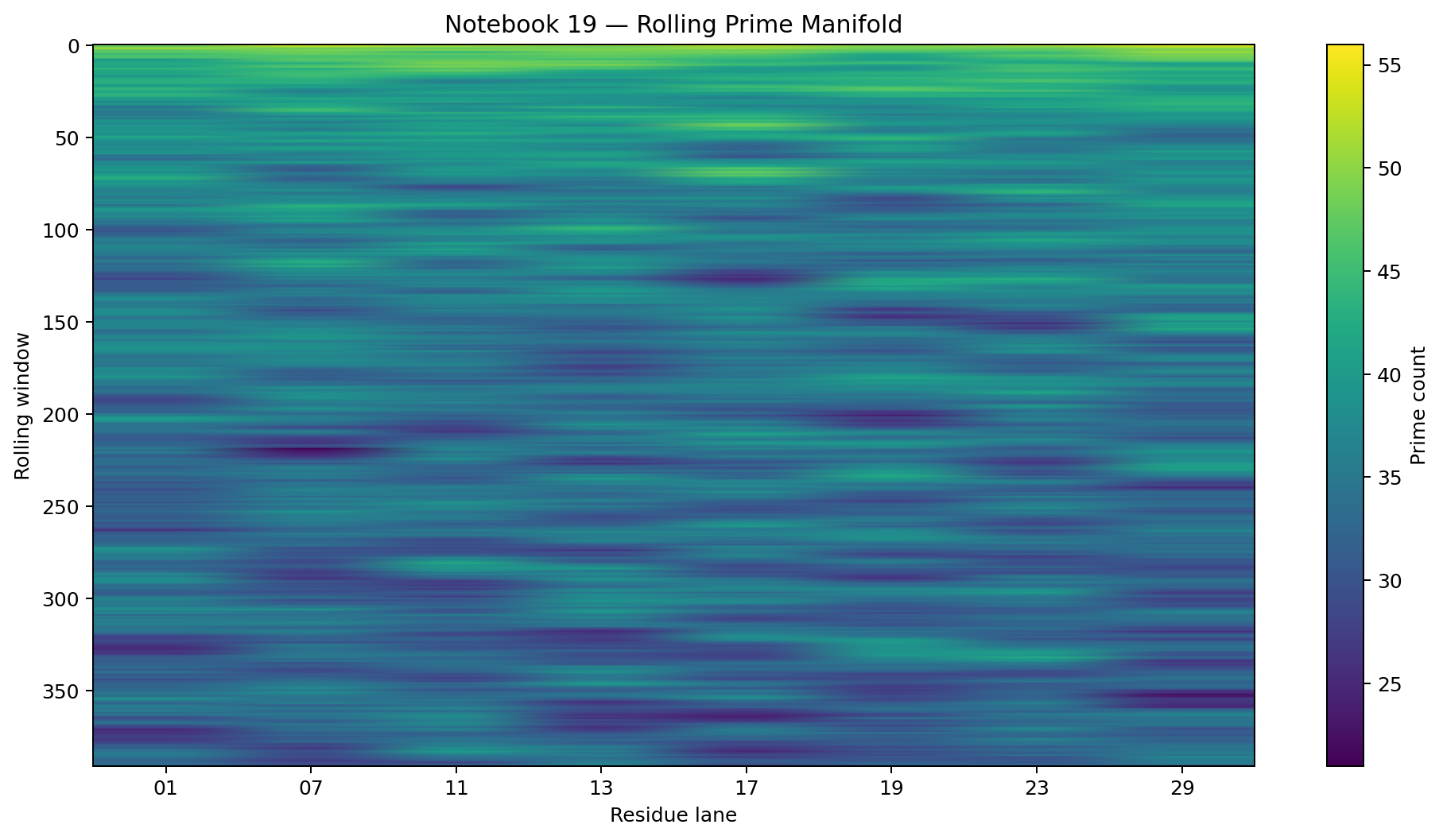
rolling_prime_manifold |
Rolling prime-count matrix across the eight admissible residue lanes. |
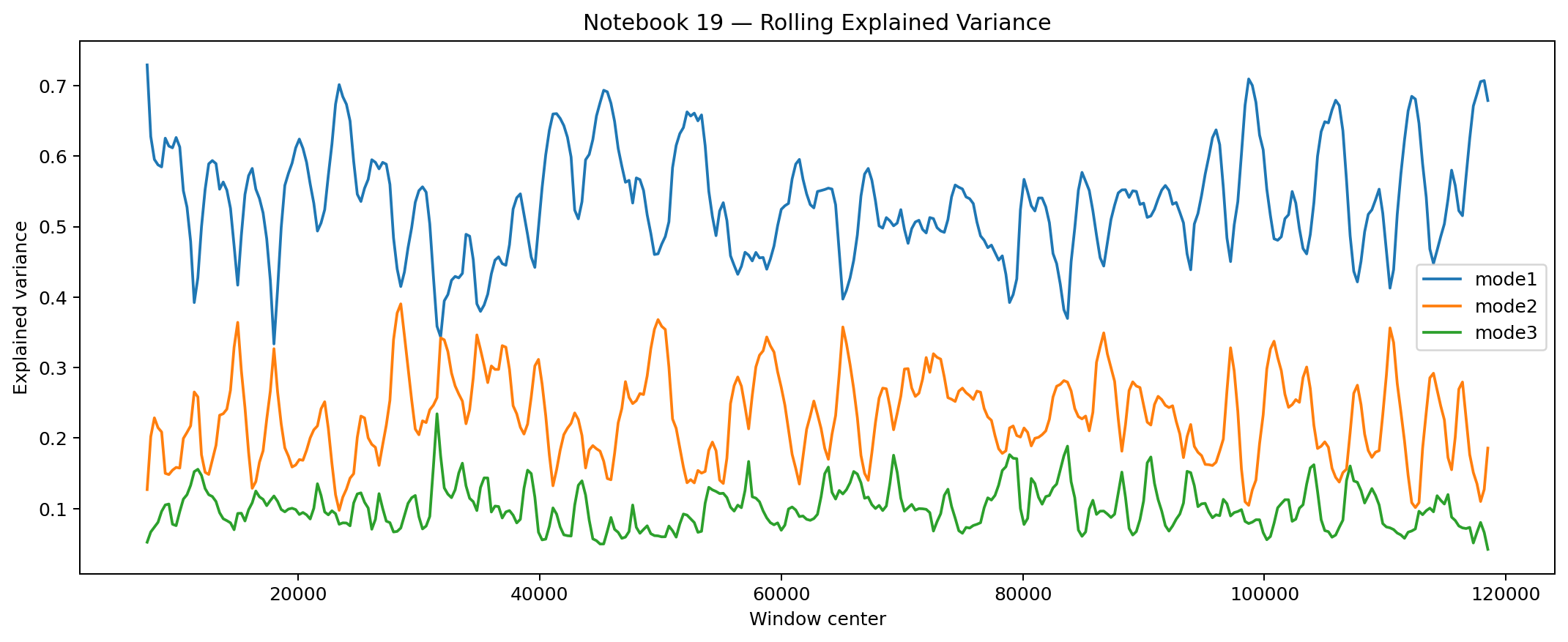
rolling_explained_variance |
Time-varying variance explained by the leading spectral modes. |
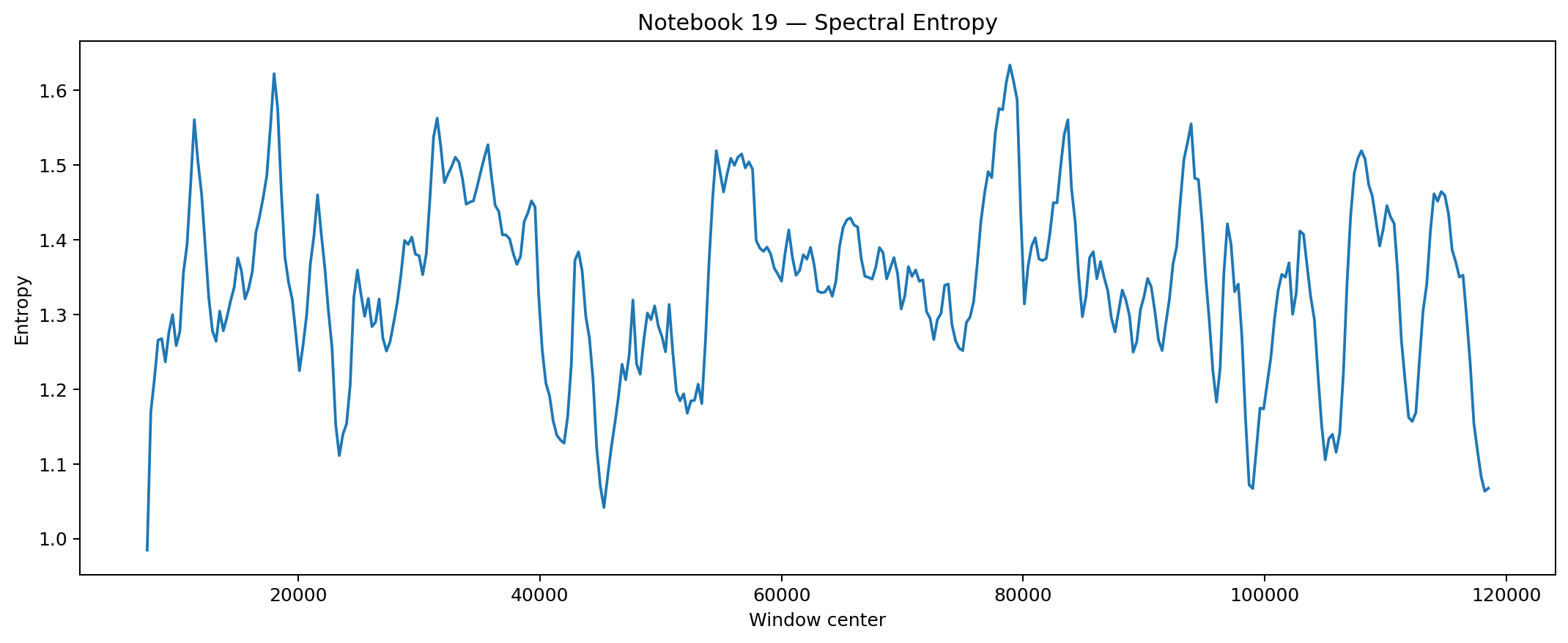
spectral_entropy |
Concentration or fragmentation of variance across modes. |
eigenspace_cosine_drift |
Cosine similarity between adjacent rolling eigenspaces. |
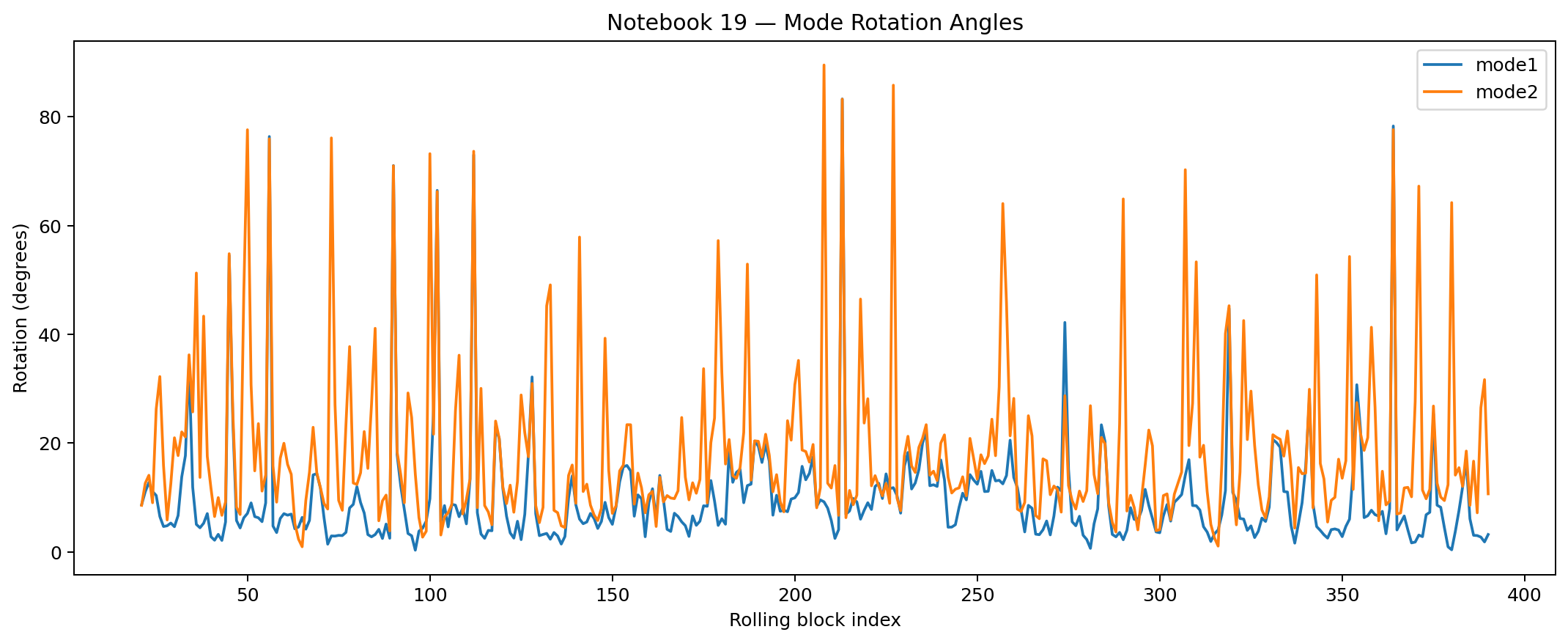
mode_rotation_angles |
Angular rotation of spectral modes across rolling windows. |
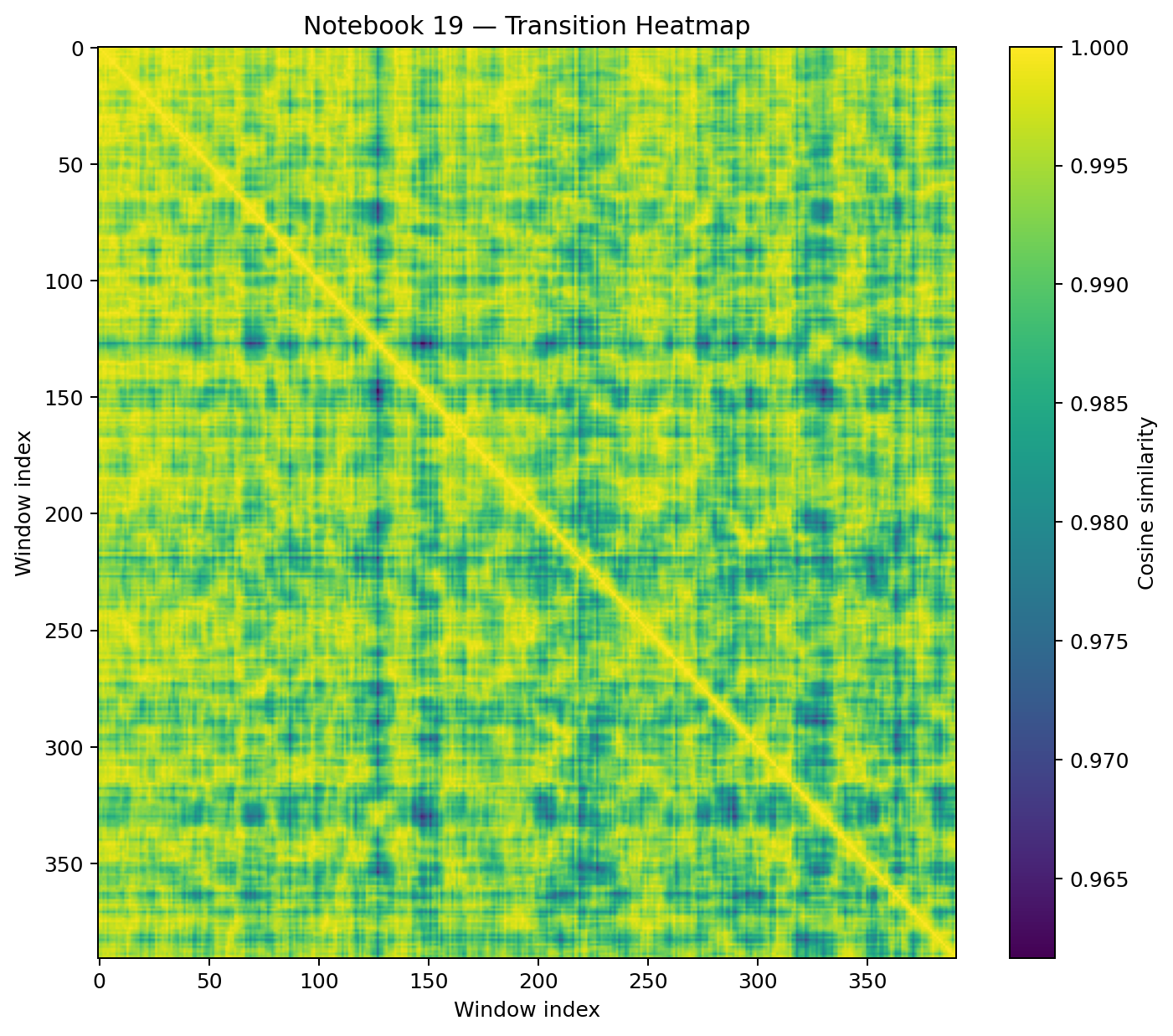
transition_heatmap |
Similarity matrix showing temporal continuity between rolling manifold states. |
Rolling Prime Manifold
Rolling Explained Variance
Spectral Entropy
Eigenspace Cosine Drift
Mode Rotation Angles
Transition Heatmap
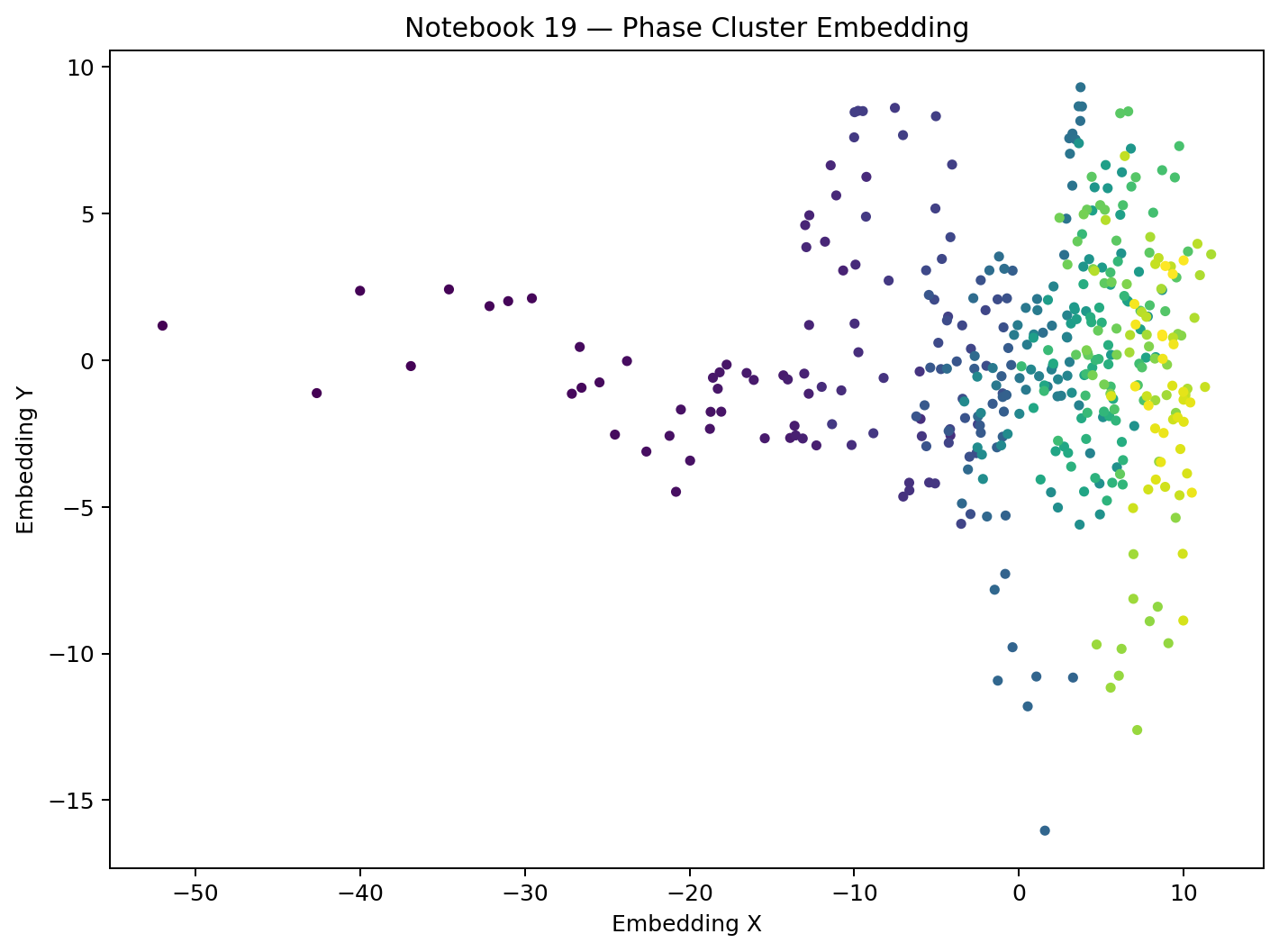
Phase Cluster Embedding
Interpretation
Notebook 19 shows that spectral structure persists through time.
The manifold does not collapse into randomness. It:
- rotates,
- drifts,
- reorganizes,
- and remains bounded within coherent temporal phases.
This report turns the residue manifold into a temporal phase system, bridging spectral decomposition and graph-manifold structure.
Relationship to Neighboring Notebooks
Notebook 17 identified spectral modes and low-rank residue-manifold structure.
Notebook 19 tracks how those modes evolve through rolling time.
Notebook 23 then converts lane relationships into graph embeddings, Laplacian modes, and graph signal structure.